No furniture material is best for everything. Solid wood can be repaired, veneer stays flat, steel can be thin, and stone is hard but can be damaged by acid such as lemon juice.
Furniture materials compared
| Material | Good at | Watch for |
|---|---|---|
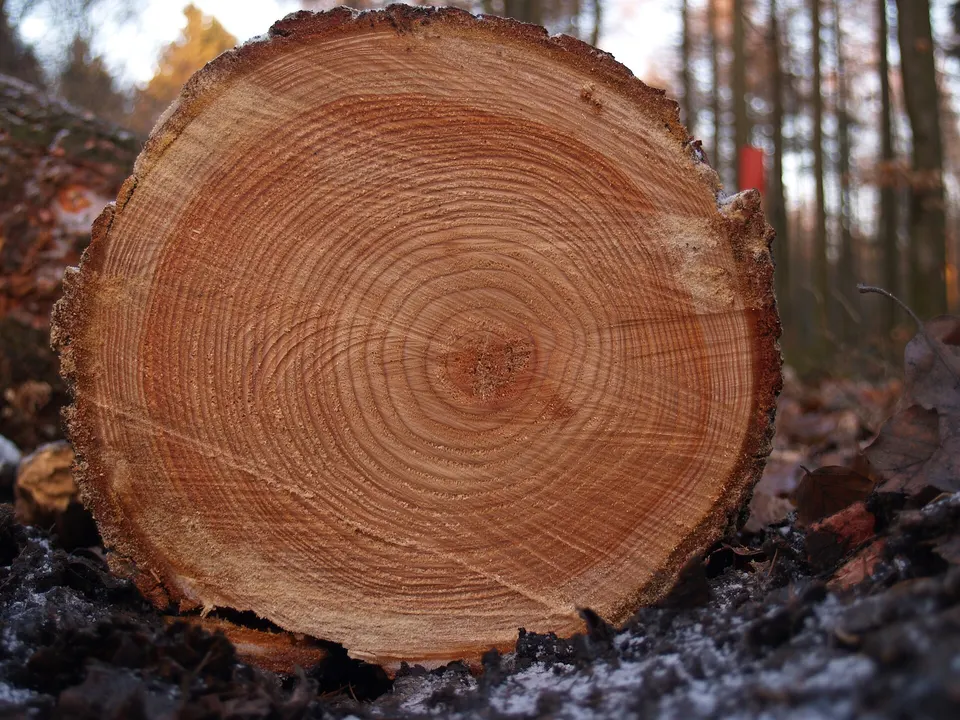
| Solid wood | Sanding and refinishing; it is the same all the way through | Swells and shrinks across the grain with humidity |
| Veneer on panel | Large flat doors and tops, matched grain | Thin skin: deep scratches and lifted edges are hard to mend |
| Steel | Slim legs and frames that carry a lot | Mild steel rusts where paint or chrome is broken |
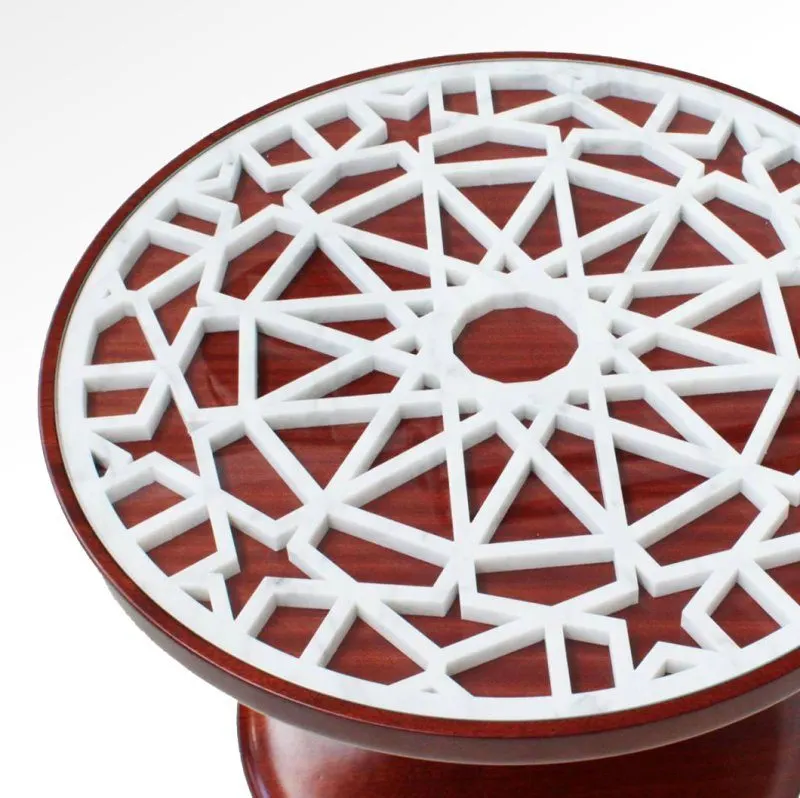
| Marble, travertine | Tops and bases that stay put | Acid dulls the polish; pores take up oil and wine |
For greener choices, see eco-friendly furniture materials.
When veneer is better than solid wood
Egyptians and Romans veneered furniture. The slice today may be as thin as 0.6 mm; older work was sawn at around 3 mm. How the log is sliced decides the look: a lathe peels a wide, wandering grain, while a flat slicer gives patterns close to sawn boards. Consecutive sheets come from neighboring layers, so a careful maker can open them like a book and mirror the figure across two doors.
The panel beneath matters as much. Plywood holds screws well. Particle board is uniform and cheap, yet weak at edges and unhappy when wet.
“Solid wood” and “wood solids” on labels
“Solid wood” and “wood solids” look alike and may mean different things. The second has been used for panels covered with veneer. In the United States, furniture may be called solid wood only if all exposed surfaces are in fact solid wood. A printed grain on foil or laminate is a photograph, and the photograph repeats.
Carbon fiber and wooden leather
Two materials come up often in modern Italian pieces. Carbon fiber is a fabric locked in resin, extremely stiff for its weight. Wooden leather is a thin sheet of wood bonded to cloth and etched by laser until it bends. Some sellers say it never fades. It is wood, and wood shifts color in daylight.
Sources
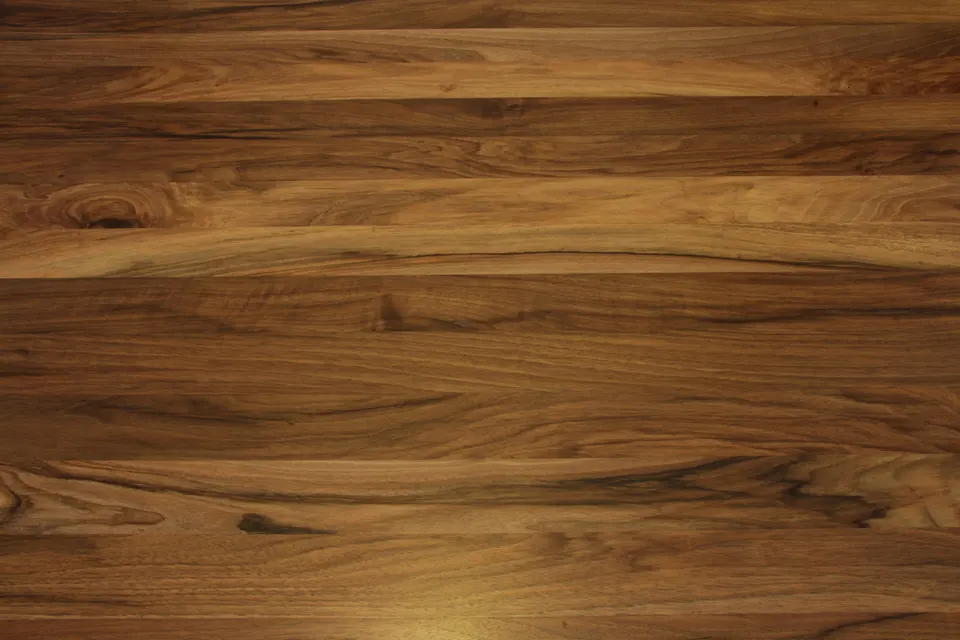
Main photo: Walnut. Photo: Martin Lorenz, CC BY-SA 3.0